

 Contact us
 Visit CPRE.org
 Donate
Chasing rainbows – why autumn is the perfect season for magic!

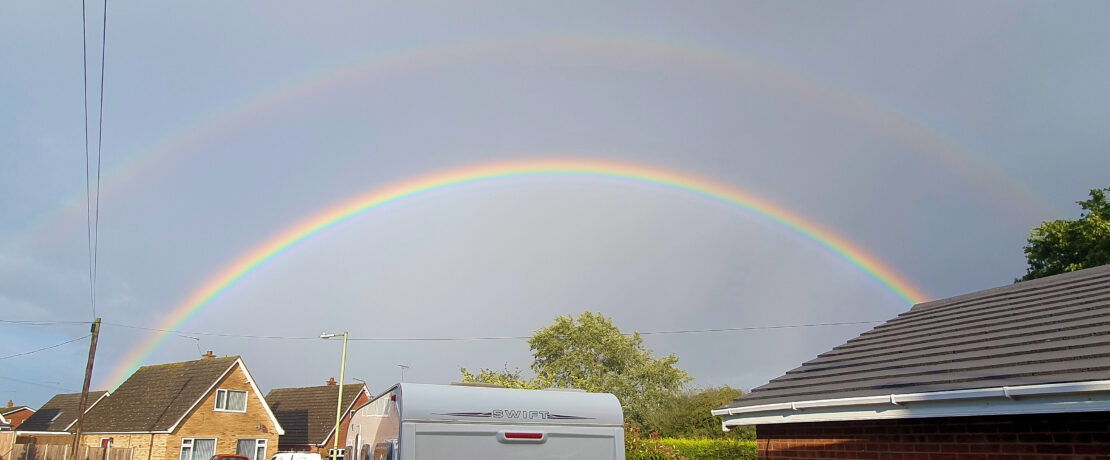
There’s a moment on a walk, perhaps across a stubble field, or down a winding green lane, when the clouds’ part, the light shifts, and something unexpected catches your eye. A sudden streak of colour arcs across the sky: a rainbow.
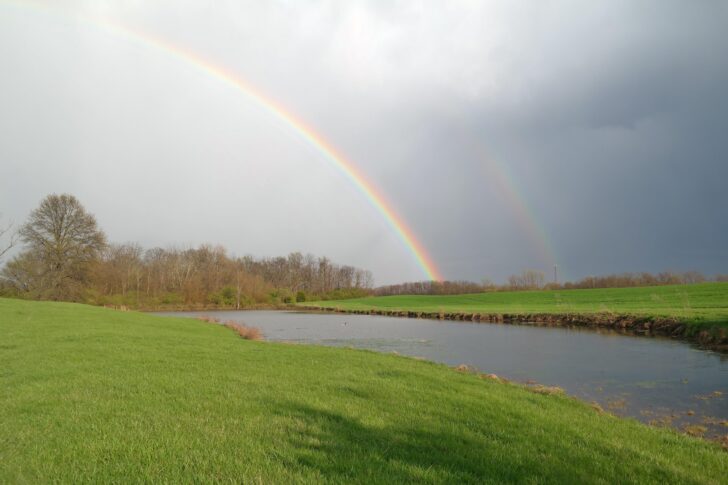
This autumn, we’ve been spotting more than usual. And we’re not alone. All across Norfolk, rainbows are popping up between the showers, hanging above wide marshes, arcing over the Broads, or glimmering in the distance as the sun breaks through over farmland.
But why now? And why do rainbows still catch our imagination so completely?
Why are rainbows so common in autumn?
Rainbows need two things: sunlight and rain. Sounds simple, but the timing and angle have to be just right.
Autumn offers ideal conditions:
- The sun sits lower in the sky, especially in the mornings and late afternoons, creating the perfect angle (between 40° and 42°) for light to refract into a rainbow.
- We get frequent showers, often passing quickly with sunshine behind them, creating that dramatic contrast between light and dark skies.
- The air tends to be cleaner and cooler, meaning water droplets linger in the atmosphere a little longer, helping form brighter, more vivid rainbows.
In short – autumn is rainbow season. And in Norfolk, where the skies stretch wide over open fields, marshes and fenland, we’re lucky to have a perfect natural stage for them.
The science bit – light, rain & a bit of geometry
Rainbows form when sunlight hits raindrops in the air. The light bends (refracts), bounces off the inside of the droplet, and bends again as it exits, splitting into its seven colours – red, orange, yellow, green, blue, indigo and violet.
You always see a rainbow with the sun behind you and rain in front, which is why they often appear in the east during late afternoon walks, or in the west during morning strolls.
Folklore & wonder
Rainbows have long captured the human imagination.
- In Norse mythology, a burning rainbow bridge called Bifröst connected Earth to Asgard, home of the gods.
- In Irish legend, leprechauns hid their pots of gold at the end of the rainbow, perhaps because it’s a place no one can reach.
- In the Bible, a rainbow marked the end of the great flood, a symbol of hope and renewal.
- And in many Indigenous cultures, rainbows are sacred, connecting sky and earth in powerful, spiritual ways.
Even today, they still feel like signs. Of change, of beauty, of something just out of reach. A reminder that even after rain, light returns.

Where to see Norfolk rainbows
The best places to spot rainbows are those with open skies and long horizons. Some of our favourites include:
- The North Norfolk coast – with rain showers sweeping in from the sea
- The Broads – where the still water sometimes reflects the arc
- Meadows and other rewilded corners – where rainbows feel like nature’s reward for a bit of mud and patience
- And even from your own doorstep, if you pause and look up when the weather breaks

Have you spotted one?
We’d love to see the rainbows you’ve discovered on your countryside adventures. Whether on your morning commute, an afternoon walk, or a quiet moment in the garden, share your photos and stories with us on social media or tag us @cprenorfolk.
Let the landscape surprise you
At CPRE Norfolk, we believe the countryside is full of small, powerful moments that connect us to something bigger, and rainbows are one of the loveliest of all. They ask nothing of us except to notice. And in return, they offer a glimpse of magic.
So, the next time you see a shower pass and sunlight stream in behind you, turn around. There might be a rainbow waiting.