


 Contact us
 Visit CPRE.org
 Donate
Your Love Letters to Norfolk: a new centenary campaign

To mark CPRE’s centenary in 2026, CPRE Norfolk invited people across the county, and beyond, to write a Love Letter to Norfolk.
Together, they form a collection of voices speaking up for the places we value and want to protect.
Our collection was started by CPRE Norfolk’s President, Sir Nicholas Bacon, who contributed a special letter which was featured in the Eastern Daily Press on Valentine’s Day.
Click image for a larger version
Your love letters – what Norfolk means to you
We were thrilled with the response to our campaign. Many of you got in touch to tell us why Norfolk is so special to you and why it should be protected.
Here are some of our favourites.
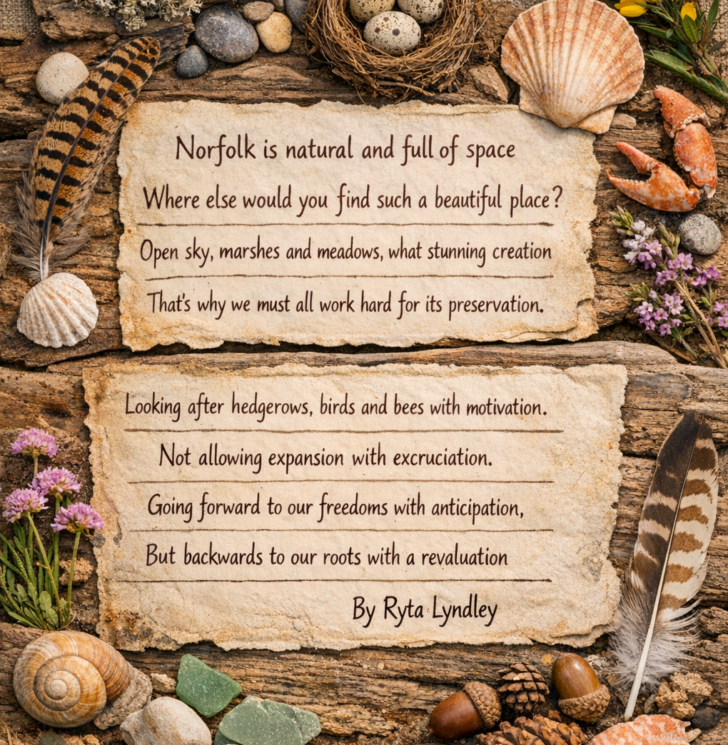
A poem about Norfolk – by Ryta Lyndley
Why I love Norfolk – by The Lord Mayor of Norwich, Cllr Paul Kendrick
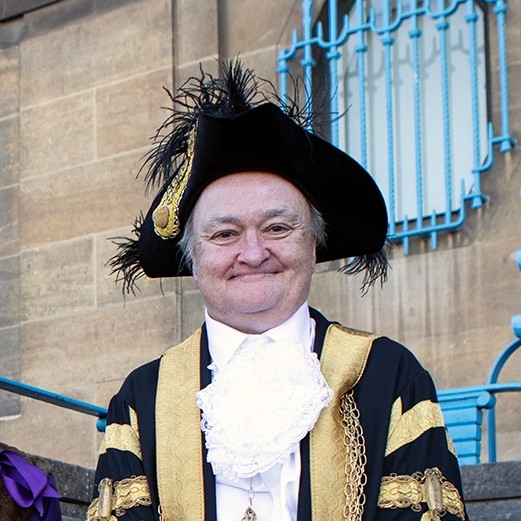
I Love Norfolk because it is where my three children, James, Joanne and Daniel, grew up.
Norwich and Norfolk are such wonderful places to raise children. Norwich is a safe place and allows young people to travel by bus to access such great activities.
I loved taking my children to Great Yarmouth Pleasure Beach so we could all enjoy the joyrides and the rollercoaster – perhaps I did even more than them.
I love Norfolk heritage railways, which I took all my children to and still do, including The North Norfolk Railway between Sheringham and Holt, The Mid Norfolk Railway between Wymondham and Dereham, the railway between Wells and Walsingham and the Bure Valley Railway between Aylsham and Wroxham.
I love Norfolk because there are so many great places to walk. There are so many small towns to visit and to love.
I just love Norfolk.
Cllr Paul Kendrick, The Lord Mayor of Norwich
A love letter to Norfolk – by Lisa Ashbury

I have lived in Norfolk for ten years now.
Long before I moved here, I felt drawn to it. My much-loved grandfather spent many years holidaying on the Broads with my grandmother. His face used to light up when he spoke about the countryside and being out on the water. He talked about big skies, birds singing (and quacking) and early mornings on the river. Listening to him, I felt as though I already knew this place, and I knew I wanted to see it for myself.
When I finally visited from my home in Bedfordshire, I completely fell in love.
It’s the skies! In summer and winter alike, the sunrises and sunsets take my breath away. Those red sunrises that only last for a few minutes – I feel so lucky to be out there, witnessing them as they develop in front of me. The way you can see for miles here feels freeing, coming from Scotland the landscape there always felt a little claustrophobic to me. There is space to think, to notice, to feel small in the best possible way. There is so much to take in.
The people I know here are fiercely proud of this county, and for very good reason. Norfolk is a beautiful place to live, to walk, to kayak, to cycle, or simply to be.
It is also full of life. I never tire of spotting stoats or weasels (I’m still never entirely sure which is which!) darting through hedgerows. I’ve watched herds of roe deer chasing one another across open fields when no one else is looking. And the owls – barn, short-eared, long-eared – gliding low over misty fields at first light, hunting breakfast in the quiet dawn. Those moments feel like gifts.
I often catch myself thinking how lucky I am to live here, I really do.
That is why I am proud to live here (the best county in the UK) and to be part of a charity that works to protect and regenerate our countryside. Norfolk is a gem – precious, resilient and deeply loved. It deserves care, thoughtfulness and long-term vision.
And perhaps most of all, I feel close to my grandfather here. When I stand by the water, or watch the light change over the fields, I think of him. His love of this place helped bring me here. In some small way, I feel I am continuing something he began.
Norfolk, you are not just where I live.
You are where I feel at home.
With love and thanks
Lisa Ashbury
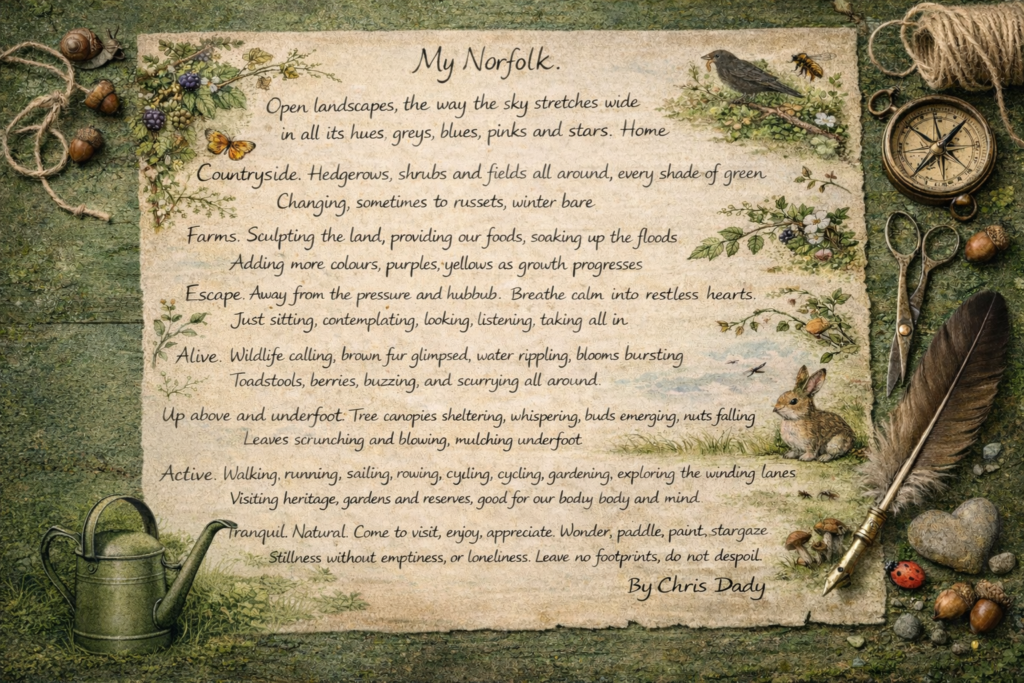
My Norfolk – by Chris Dady
Norfolk Loam – by Nick Allen
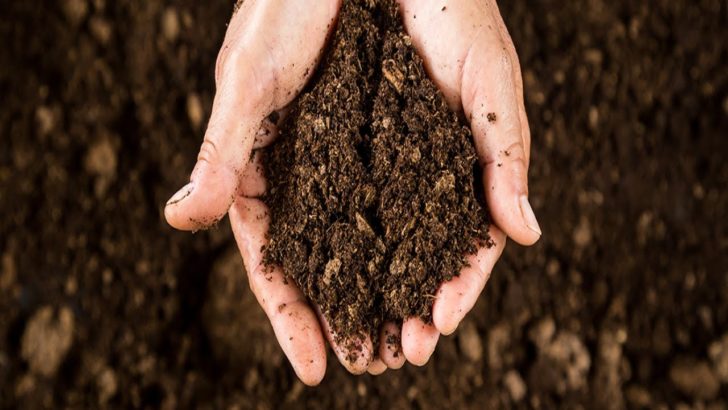
You are the gritty richness of my home
The dark horizon in furrows thrown
I’m bound to you by yeoman roots
Of generations with clay clumped boot
Who turned the seedbed with horse and rein,
Then ploughed by steam’s advancing chain,
And now through diesel’s endless traction
Still chase the harvest’s growing fraction.
Beneath my step you hold your ground:
A mix of silt and sand and clay, well-bound.
A friable tilth, a living skin,
Where humus threads the roots within;
Fungal lace and earthworm cast
Turn stubble, dung, from seasons past
To carbon fixed and safely stored
In aggregates the plough still scored
At Holkham’s park the vision grew
As Coke proved what good loam can do:
That root and stock, and care
Could knit the soil and farmer fair.
How four-course rotation remade the field
Wheat and barley’s reliable yield,
Then subsoilers deepens every seam,
And chemicals flow in silver stream,
Brought quickened growth and taller grain,
Yet leached the subtle life and strain;
What centuries of dung and ley
Had banked in carbon day by day,
Rose gently on a warming breeze.
So may this century learn at last
From tended fields and lessons past:
That soil is more than yield per acre
It is climate’s quiet risk-abater.
In roots left long through minimum till
Your humus stores again can fill
Through carbon sequestration
Once more you come to save our nation
A heartfelt letter to Norfolk – by Steve Mackinder

Dear Norfolk
Sorry it’s been so long since I last wrote to you. This is a hard letter to write but we’ve known each other for some 68 years but it’s becoming increasingly obvious that our initial attraction has waned as you’ve found others who caught your eye.
The days of walks under hawthorns littered with the ethereal ‘hay’ nests of tree sparrows are gone and instead of sparrows it’s the low roar of traffic on the bypass which is the soundtrack of our lives. I wistfully recall picnic Sundays on the beach at Holme when a blistering sun shone to a horizon untrammelled by twirling metal windmills only there now to light the drive home on ‘dualled’ tarmac bypasses.
I don’t know when my love for you changed but I recall a tipsy midnight garden walk alone and heard a cuckoo calling in the dark…. my blood ran cold and something in me broke… it was as though the midnight cuckoo heralded the end of things as I wanted them to be.
Gentlemanly convention requires me to offer you some trite squit about the problem not being you but me…. but sadly it’s not true. It is you who has changed and while
I still want you I don’t think I love you anymore and everything around me says you’ve moved on.. and I don’t want to.
No doubt I’ll still see you every now and again across a field or a hedge and remember past times… but as always happens now, a car or a low flying jet will spoil the moment.
Sorry for the melancholy…. it underlies every hour and unless someone in the Citadel at Trowse wakes up one day and sees the damage they’ve done to our relationship I think we’ll continue to grow apart….. and it makes me sad.
Steve Mackinder
Our Norfolk countrysides – by Prof. Tim O’Riordan
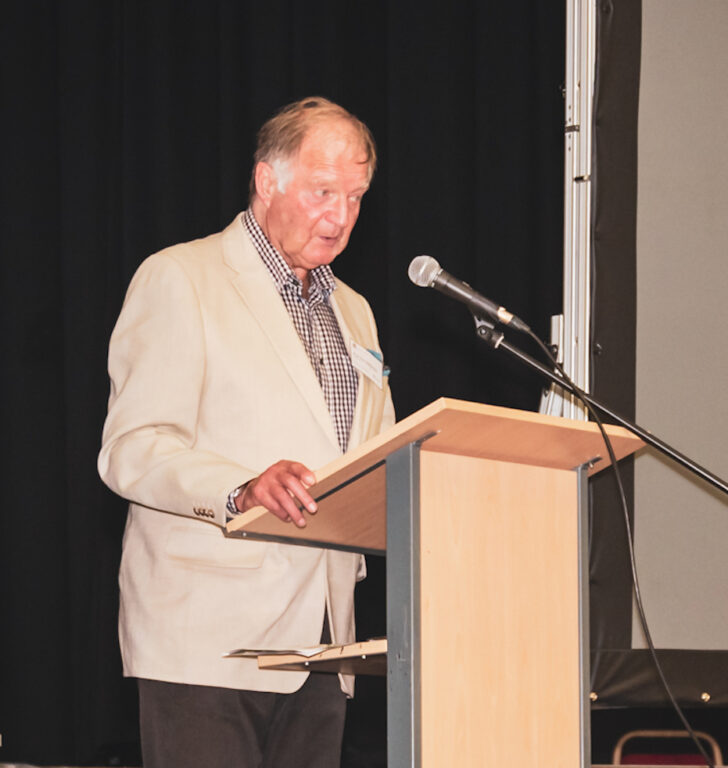
Our landscapes are best understood by our countrysides.
Our wonderful countrysides are shaped and fashioned by diversifying agriculture, strengthening nature, and controlling development.
All our countrysides are outcomes of countless generations of caring effort and uncaring neglect.
All our countrysides have become what they are over the past century largely due to the attention of the Council for the Protection of Rural England and its sister relatives in the UK nationhoods.
In its hundredth year CPRE has morphed into a campaigning countryside charity. Without its alertness, our countrysides would be characterised by uncaring neglect. Now is the time for all generations to appreciate its legacy.
I have the honour of being President of CPRE Norfolk for close to a quarter of its century. What I have experienced is the dedications of volunteers who have devoted their knowledge, experience, and love of heritage in the cause of countryside care. Without their commitment, we would all be unknowingly worse off.
Over these turbulent ten decades it has been hard pounding. Now we face a forthcoming ten decades of unimaginable convulsion. Many of this year’s newborns will live through this. Theirs is a future which has already arrived.
If the new Norfolk Countryside Care movement hits its stride, it will shape the land with a mix of regeneration of new natures, of restored soils, of bold scenery, of sociable communities, and of security of living, and the enrichment of souls.
CPRE Norfolk has every reason to be forever proud. Its noble legacy will be hugely magnified if everyone in this marvellous county becomes a countryside champion.
My Love for Norfolk – by Lady Laurel Walpole
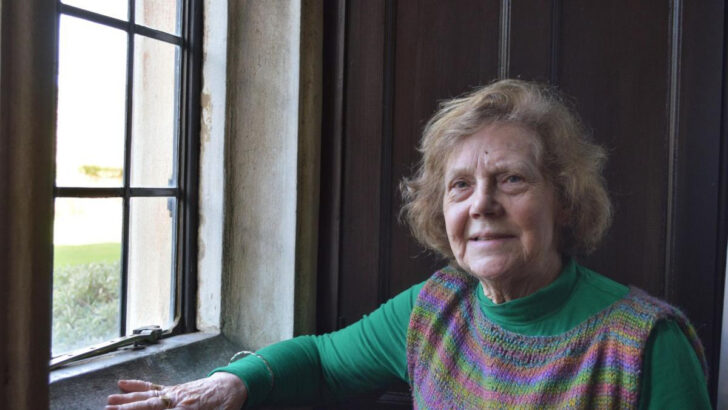
My love for Norfolk is linked with the many people who have sought to protect its special nature.
This was enhanced by my late husband’s affection for and knowledge of the county. Other than short spells at school, university and in London for the House of Lords, he had never lived anywhere else. He knew his local area around Wolterton and Mannington Halls from war time walks in his pram, through boyhood cycling, to wider areas as County Council Chair for Highways and numerous charities such as Norfolk Historic Buildings Trust.
During the Covid pandemic we renewed this knowledge of local lanes. As Chair of the North Norfolk branch and later of CPRE Norfolk, I met many remarkable people who introduced me not only to the county’s beauty but its fragility.
My first knowledge of a campaign was for the Halvergate marshes and led to a real love of the Broads area. This was my first meeting with Martin Walton who became a personal friend as well as staunch CPRE colleague; I had the honour of giving the eulogy at his funeral.
Before I came to live in Norfolk in 1980 my connections with the county were sparse, other than visits to museums in my capacity as Director of the Southeast Area Museums Service. But my first visit to the Broads was in the 1950s. During the 1939-45 was my father was stationed briefly with the RAF at Coltishall. Having lived most of his life in rural Wiltshire he was fascinated by the area and wanted to show it to my mother and I. We came on a short break intending to plan for a longer holiday, but the number of people and boats at places like Ranworth, put him off and we never came on the holiday. So perhaps my first encounter with tourist and other pressures on the county!
There is something wonderful about the stretches of calm water and open marshland so when I came to live here discovered that when you were ‘on the water’ it was easy to leave the busy places and had many happy hours exploring wildlife rich places. I recollect doing a BBC interview for CPRE at Ranworth some thirty years after that first visit!
One member of the North Norfolk committee Mary Norwak, cook and writer, was already known to me as an old friend of the Walpole family and she introduced me to Cley where I remember her living in three different houses. Cley beach has always been a popular family destination with happy memories of kite flying admiring the beautiful skies. The history of the area fascinated me. When picnicking on the green by the church I thought about its time as Cley harbour and wondered if there were any traced of the ship which went down carrying treasures including Flemish tapestries to Wolterton Hall in the early eighteenth century.
Such historical musings are very much a part of my love for my adopted county. The fragility of the Cley coastal area is evident, but we can be grateful for the Norfolk Wildlife Trust endeavours.
Near to Cley is Morston. Here I have wonderful memories of family excursions and even swimming in November in the warm pools. Now this area has become very popular and whilst not wanting to deny others these pleasures appreciate efforts not to spoil what is its special charm. Coming from Wiltshire with no coast, the Norfolk coastline became very important to me.
Another committee member was Christine Carter, sister of Anglia TV personality Dick Joice. Her knowledge of the county around her home at Bale was extensive and with her I became involved in a CPRE ‘spinoff’, the Norfolk Dovecote Trust, and like to think we saved several threatened buildings. Today people buying their frozen chickens forget that these structures once held an all-important winter food source.
Our most contentious North Norfolk issue was that of the Letheringsett bypass. This bought me into contact with the amazing campaigner, Ian Shepherd, and the Glaven Valley. Norfolk’s river valleys continued to fascinate me, and these often neglected but peaceful waterways are another of my ‘loves’! Ian’s detailed scientific knowledge never failed to impress.
At this time John Timpson was President and together we weathered the storm, comparing notes about people who no longer spoke to us because of their support for this new road!
Another area of contention closer to home was Thwaite Common. My favourite of the churches in the Walpole patronage is Thwaite. On one side of the church is the road from Aldborough to the Cromer Road, but on the other a view of uninterrupted fields and hedgerows. My chosen route home from the church was always across Thwaite Common whilst remembering the fight to save it and in summer admiring the butterflies.
Norfolk churches are so much a part of the landscape, and I am glad to have been involved in the efforts to save their churchyards as wildlife havens. As my family would say, ‘Mum loves a good headstone’!
Within the landscape smaller buildings are also important. Archivist and friend, Elizabeth Rutledge, told me about the cottage in New Buckenham which spearheaded the move to preserve these houses. Sadly, not enough to save a row of cottages in Itteringham close to the church and replace with a rather ugly new Rectory in the 1960’s.
This reminds me of the CPRE campaign on windows and an exhibition my husband and I with photographer, Richard Denyer, organised in Norwich cathedral for the Triennial Festival, which although on the wider theme of all windows, highlighted this need to install appropriate windows in cottages.
Vernacular architecture is another of my ‘loves’ together with many of our smaller and humbler villages which are so in need of protection from the wrong kind of development, but so in need of continuing life with conversion of buildings, shops, pubs and village halls, as well as new houses. I was able to help with an initiative funded by the European Economic Community for funding for community endeavours, including shops.
Closer to home one favourite view is from the balcony at the back of Wolterton Hall. Here is an enormous stretch of parkland as the Wolterton Estate beyond its lake joins that of Blickling.
The countryside is never completely ‘natural’ in land in Norfolk and reveals management over many centuries. Here such managing has protected an extensive area and although not all publicly owned, trust that protections by legislation of property grading and conservation areas will ensure its future beauty.
Around Wolterton and Mannington are planted many trees – perhaps thousands. Some in plantations and in the arboretum of British trees in new woodland areas, but others ‘saved’ in hedgerows. Now I am mainly restricted to my room in Mannington Hall I can still enjoy some of these trees; ornamental varieties closer to the house and native species beyond with the last a ring planted in memory of my late husband, Robin. His is not the only memory kept by trees. In the ‘chapel garden’ at Mannington, the area around the ruined medieval church are trees planted in memory of CPRE donors and supporters.
CPRE Norfolk bought me into contact with many remarkable people who in so many different ways helped to preserve and protect so many different aspects of this county whose understated beauty is so special. And I have spent many hours explaining to others that it is NOT FLAT!
Imagined voices from Norfolk’s past
To help inspire people to put pen to paper (or finger to keyboard), we have created a series of imagined love letters from figures closely associated with Norfolk’s history.
These include:
- Lord Nelson, reflecting on the county that shaped his sense of duty and resolve. (Read Lord Nelson’s letter here)
- Boudica, writing fiercely of land, freedom and identity (Read Boudica’s letter here)
- Julian of Norwich, offering a contemplative vision of care, continuity and hope (Read Julian of Norwich’ letter here)
- Edith Cavell, speaking quietly of service, compassion and responsibility (Read Edith Cavell’s letter here)
- Anna Sewell, talking about Norfolk as a kind companion with truth and beauty (Read Anna Sewell’s letter here)
These letters are not intended as historical reconstructions, but as creative reflections – a way of showing that love for Norfolk has always taken many forms, and that the impulse to protect it is shared across time.
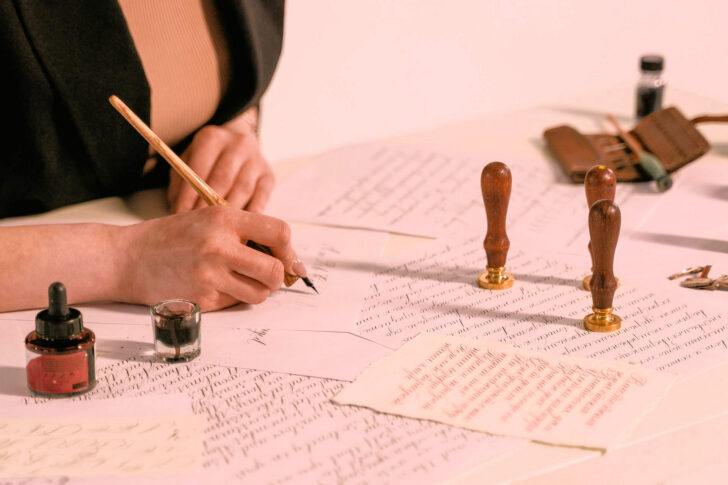
Why love letters – and why now?
Norfolk’s countryside faces growing challenges: habitat loss, climate change, development pressure, agricultural intensification and declining biodiversity. At the same time, it remains a place of extraordinary beauty, productivity and cultural identity.
By inviting people to write love letters to Norfolk, we want to:
- Celebrate what makes the county special
- Give space for people to express concern as well as affection
- Build a shared picture of why protecting Norfolk’s countryside matters
- Mark CPRE’s centenary by amplifying the voices of those who care most
Your letter does not need to be polished or political. What matters is that it is honest.
How to write your own Love Letter to Norfolk
Not sure how to begin?
We all get a little tongue tied sometimes, so here are a few prompts to help get you started. Remember, there’s no right or wrong.
Dear Norfolk,
I love you because…
The place in Norfolk that matters most to me is…
When I spend time there, I feel…
This landscape matters because…
It gives us…
I want future generations to know…
Norfolk has shaped me by…
One memory I’ll always carry is…
I’m writing this letter because I want Norfolk to be…
With love,
(Your name)
Your letter can be as short or as long as you like. It can focus on one place, one memory, or one concern. There is no single right way to write a love letter.
How to take part
Please email your Love Letter to Norfolk to LoveNorfolk@cprenorfolk.org.uk
Alternatively, you can post it to:
15, Pigg Lane
Norwich
Norfolk
NR3 1RS
Selected letters will be published on our website, shared through our social media channels, and may appear in local media as part of CPRE’s centenary celebrations.
We hope this campaign will remind us that caring for the countryside begins with paying attention to what we love – and finding the words to say why it matters.
