

 Contact us
 Visit CPRE.org
 Donate
Data centres risk a land crisis like never before. Help us sound the alarm

In the race to build capacity for AI, England is seeing a huge increase in applications for large-scale data centres.
But there’s no plan to guide where they go, or how they’re built and run, meaning the countryside could become a dumping ground for these massive, water- and energy- intensive developments.
The risk is a land crisis like never before, with huge impacts on landscapes, tranquility, nature and health. That’s why we’re calling for a pause to unchecked data centre development.

From online shopping to social media, streaming, and saving files for remote access, data centres store and process the daily information we use and share online. They’ve grown as our use of the internet has grown.
But the current rush to build isn’t just down to ordinary demand. It’s being driven by the race to build AI capacity which could account for around 70% of UK data centre capacity by 2035.
AI could have a huge part to play in addressing some of our biggest challenges. But that doesn’t mean companies should get a free pass to build massive, energy- and water-intensive developments without challenge, or without thought for the impacts on people, land, nature and climate.
That’s why we’re calling for a pause on unchecked data centre development until the government has a real plan for them. Are you with us?
Learn more on the CPRE website.
Why does it matter?
Data centres consume vast amounts of power – London’s data centres alone use as much electricity as 750,000 homes – putting more pressure on our already overstretched grid infrastructure.
Even single, medium-sized data centres can use hundreds of millions of litres of water a year. Some systems even draw on drinking water supplies in areas where water is already scarce, which has dire consequences for communities and nature.
Some seek their own on-site gas power generation rather than wait for the grid, meaning more carbon emissions, locked in for decades.
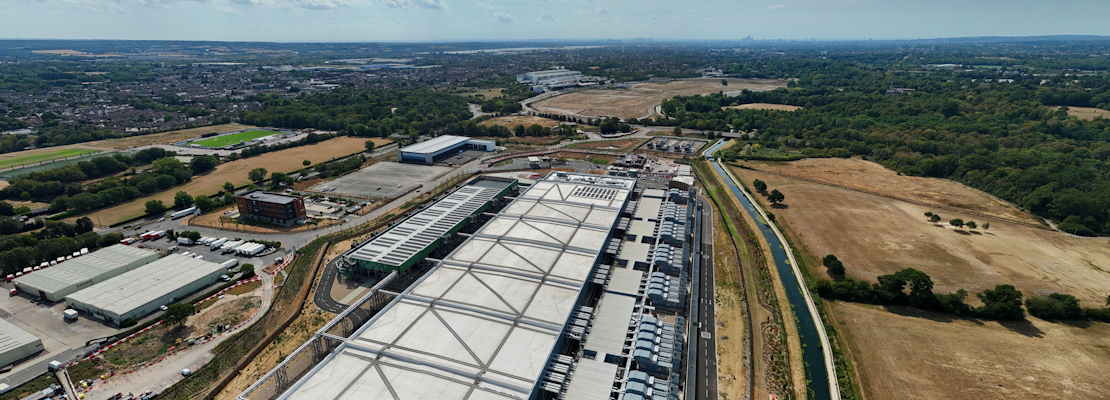
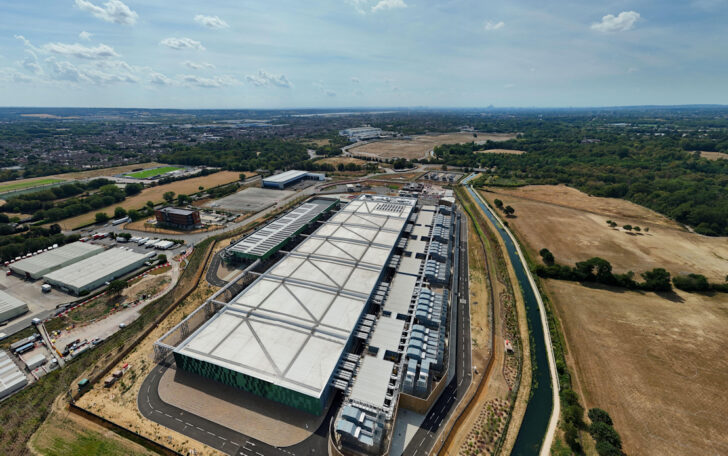
And they sprawl. The proposed campus in Havering, on the edge of London, would swallow 218 hectares of Green Belt (or over 300 football pitches).
Worse still, the rules are being rewritten to push these through faster.
Some schemes can now opt to bypass local councils and communities entirely, rushing their applications through before the government has even published the policy that’s meant to govern them. Public voice and democratic process are falling by the wayside in the gold rush – and the countryside is treated as expendable.
There are at least 100 more data centres in the pipeline, including in Norfolk, but no government body tracks them, and no-one can tell you exactly how much water they use.
We need to press the pause button before we sleepwalk into a land crisis.
We want to see:
- Clear brownfield-first policy – so data centres go on previously developed land before green fields or valuable farmland.
- Dedicated planning rules – so the environmental and landscape impact of data centres is properly assessed, community voice is considered, transparency on the water and energy they use and the impact of noise, heat, light and air pollution on people and nature.
- Innovative data centre design – so it minimises the scale of development and its impact on landscapes and resource use, and connects to wider energy system planning including re-using waste heat locally.
- Climate targets protected – so that development doesn’t push them out of reach and cause emissions to spiral.
- Public conversation on AI and data centres – so there is clearer public consensus on demand and need for the scale of this technology balancing the benefits and risks.
Data centres need to be in the right place, with proper rules and high environmental standards.
If you stand with us, add your name to our petition