

 Contact us
 Visit CPRE.org
 Donate
Creating an eco-friendly home Part 3 – Heating and energy solutions

CPRE Norfolk trustee Chris Dady, continues to chart his journey through building and retrofitting two properties, sharing what he learned on his journey.
Quick links to other sections of this story can be found at the bottom of the page.
Eco-Friendly Heating and Energy Solutions
Heating systems play a central role in both energy efficiency and sustainability. Let’s explore some of the most impactful heating and energy options, from traditional upgrades to emerging green technologies.
An old gas or oil boiler will never match the efficiency of a modern replacement. Many people choose to replace like-for-like because it’s the cheapest and simplest option and it does offer some benefits. However, whatever heating system you have, it’s crucial to set up ‘zoned’ control using room thermostats for better efficiency and comfort.
Alternatives to fossil-fuelled boilers
However, if you’re serious about going green, any fossil-fuelled boiler is not the best option.
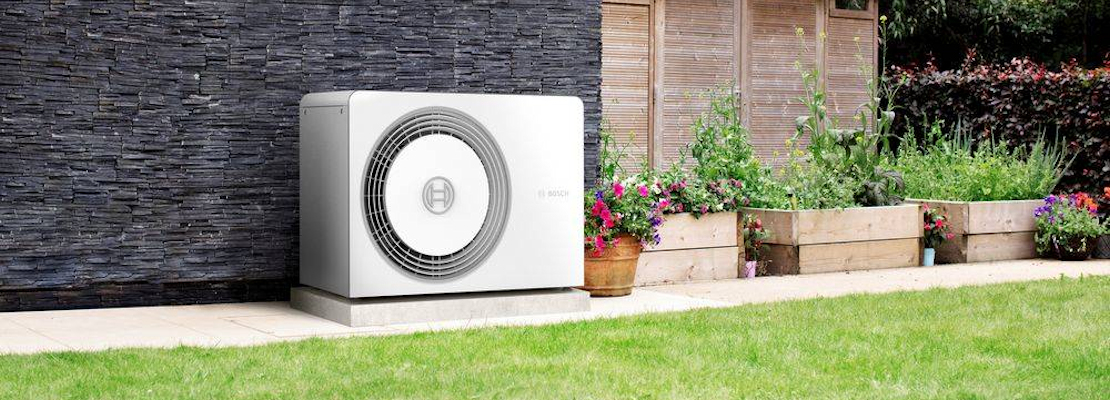
Heat pump systems
When we built our house, we opted for an air source heat pump with underfloor heating on both floors and it worked perfectly. Retrofitting a heat pump into an existing home can be more challenging.
Heat pumps operate at much lower temperatures than gas or oil boilers, so radiators will feel warm rather than hot. Problems often arise from poorly designed or specified systems or simply unrealistic expectations. Larger radiators or smart (fan-assisted) radiators can help, and you’ll need space for additional tanks.
Choosing a reputable, experienced installer is absolutely essential.
Right now, there are grants available if you’re replacing a fossil fuel boiler. A heat pump system itself costs around £10,000, but you’ll need to budget extra for new radiators, upgraded wiring, and other work.
With the grant, expect your overall outlay to fall somewhere between £5,000 and £12,000, depending on your property’s size and the work needed. Heat pumps can draw energy from the air, the ground, or even nearby water sources.
In our bungalow, the gas boiler was old and the system needed a full overhaul. We decided to install a fully electric system, including a combi-style electric water heater. So far, it has performed well but without solar panels and battery storage, it could be expensive to run.
It was also the priciest option upfront, with no grants available. On the plus side, the system is simple, quiet, low-maintenance, and very flexible.
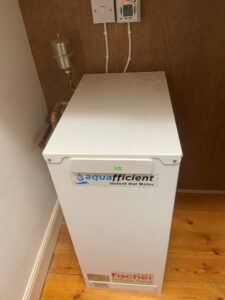 Electric Combi heat store unit
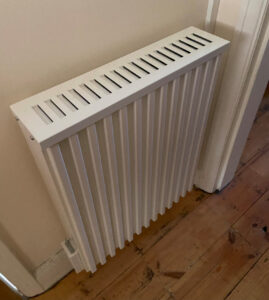 Electric radiator
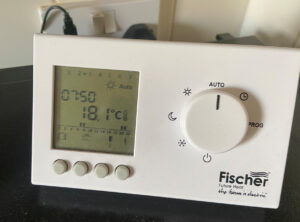 Individual room thermostat and timer control
If you have good floor insulation, electric underfloor heating mats are another option, often used in kitchens and bathrooms. Their effectiveness depends heavily on ensuring heat isn’t lost through poorly insulated foundations.
Infrared heating panels
A newer and very promising technology is infrared heating panels. We installed these in a log cabin we built in our garden and recently stayed in a hotel that also used infrared panels to heat its rooms and we were impressed. These panels can be wall- or ceiling-mounted, and in the hotel, they were cleverly disguised as paintings and mirrors.
A new build in North Norfolk incorporates infrared sheets directly into plastered ceilings, and these mats can also be used under flooring. Infrared panels heat objects and people rather than the air, offering a very different heating experience and early signs are positive.
 Infrared ‘picture’ radiators
Other heating solutions
Microwave boilers
Microwave boilers are another exciting technology in development. Trials are underway, with potential rollout as soon as 2026 if testing goes well. These boilers could offer a direct, energy-efficient replacement for gas or oil boilers at a comparable cost, a real breakthrough for fossil fuel-free heating.
Hydrogen as a fuel
Hydrogen has also been suggested as a future energy source. Environmentally friendly if made using renewable energy (known as green hydrogen), it has strong potential. The current replacement of gas infrastructure with plastic pipes will eventually allow a small percentage of hydrogen to be blended into the gas supply. While all new gas boilers can already accommodate this mix, it only slightly reduces emissions.
Full hydrogen supply availability remains uncertain and relying on blue hydrogen (made from fossil fuels) would undermine the environmental benefits.
Wood pellet boilers & wood burners
Wood pellet boilers are available too, but they come with caveats. They produce emissions, and pellets must be sustainably sourced and kept very dry to avoid jams in the feed systems.
Some larger properties have successfully installed pellet boilers, and I’ve seen one used in a Passivhaus basement, but always where there’s ample space for fuel storage.
Others use wood burners where they have a steady supply of properly dried firewood. Burned correctly, seasoned timber produces fewer emissions than green wood or coal.
Wood burners can look great in sales brochures, but they’re not the best option for cutting your carbon footprint.
District heating schemes
Other solutions are also emerging, including district heating schemes that capture waste heat from industrial processes, and systems that use underground water stores to provide seasonal heating or cooling via heat exchangers.
Solar thermal panels
You might have noticed houses with just one or two panels on the roof. These are usually solar thermal panels, designed to heat water using the sun’s energy. They’re an older technology, but they can still be effective.
These systems work alongside a fossil-fuel boiler and require a hot water storage or immersion tank (so they’re not compatible with combi boilers that heat water only on demand). A typical installation costs between £3,000 and £5,000.
I recall a case where public toilets were fitted with too many panels, leading to issues with superheated water during summer. A reminder that more isn’t always better!.
Generating and buying electricity
One of the best things about electricity is that you can generate your own and even store it. You can also choose to buy green electricity from the grid, with a range of tariffs available.
Currently, electricity prices are based on the marginal cost, meaning the whole supply is priced according to the highest cost of generation (typically gas power stations), not the average cost. As a result, electricity is more expensive than it should be.
If pricing more accurately reflected cheaper sources like wind and solar, electricity could be far more affordable.
At our previous house, we installed seven photovoltaic (PV) panels, back when a generous government scheme paid around 45p per unit for exported energy, a fantastic deal that’s unfortunately no longer available. In our current bungalow, we’ve expanded to 15 PV panels, feeding four batteries with a combined capacity of 12.4kWh. We can still export surplus energy, though it’s now sold at a much lower rate, so it makes far more sense for us to use the energy we produce.
During winter, we charge our batteries overnight when electricity is cheaper, and use that stored power during the day. Our system is designed to save around half of our total electricity bill, and the installation cost was approximately £12,000.
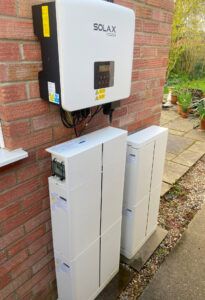
Our battery installation
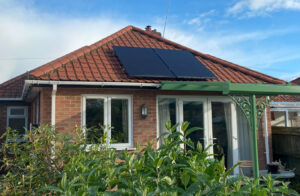
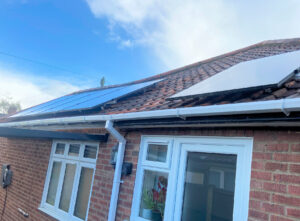
Our photovoltaic panels
Wind turbines are also being developed for domestic use, with newer, smaller designs becoming available. If you have enough space, installing a wind turbine could be a great complement to solar panels, increasing your renewable energy production.
For those lucky enough to live by a river, there are even small-scale hydroelectric systems available.
Green electricity tariffs
Choosing renewable (green) electricity is one of the simplest ways to cut your carbon footprint. Many suppliers now offer green tariffs.
If, like us, you’ve gone fully electric, it’s important to pick a tariff that supports your usage patterns. For example, cheaper overnight rates for charging batteries, heating water, running the washing machine, and so on.
We’re currently on Octopus Agile, a dynamic tariff where the price changes every half hour based on real-time demand. Sometimes, it’s extremely cheap overnight and occasionally, we even get paid to use electricity when there’s excess supply in the grid. It does take a bit of planning to maximise the benefits, but overall, it’s worked well for us.
Most people now have a smart meter, and we’ve had one in both our properties. In our old house, the early version of the meter didn’t show how much we were generating. In our current home, the meter doesn’t fully integrate with our tariff, so while it doesn’t display accurate cost figures, it does show how much electricity we’re using and how much of it is generated by our solar system.
Some people find smart meters confusing, especially when they see spikes in usage from high-energy appliances like kettles. I know a few who’ve unplugged them out of frustration! Still, smart meters are here to stay, and they automatically send readings to your supplier, meaning no more estimated bills.
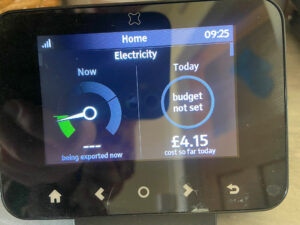
With these options, creating a greener, more efficient home is achievable, whether you’re retrofitting an existing property or building from scratch.
From high-tech heat pumps to DIY solar solutions, sustainable energy options have never been more accessible.
Continue the story – quick links
Part 1: Getting started: First steps to a sustainable home
Part 2: Insulation and ventilation: Creating an efficient, comfortable home
Part 4: Greener solutions for car and travel, water conservation & gardens
Part 5: The case for retrofitting and higher building standards