

 Contact us
 Visit CPRE.org
 Donate
Creating an eco-friendly home Part 4 – Greener travel and gardens

CPRE Norfolk trustee Chris Dady, continues to chart his journey through building and retrofitting two properties, sharing what he learned on his journey.
Quick links to other sections of this story can be found at the bottom of the page.
Greener solutions for travel, water conservation and gardens
Your car and travel
We all know that transport, especially cars and planes, is a major source of fossil fuel use. Aviation may one day become greener, but for now, flying remains a significant contributor to emissions.
If you’re serious about reducing your carbon footprint, avoiding air travel whenever possible is one of the best choices you can make.
Governments have set targets for us all to drive electric cars in the future, though deadlines like 2035 seem to keep slipping. Realistically, it’s unlikely we’ll see a full, forced switch by then. Instead, we’re seeing a race between technologies:
- Fast-charging, long-range electric cars are on the way, but their success will depend on how quickly charging infrastructure expands.
- Green fuels are already developed, but need to be mass-produced affordably — and without requiring too much agricultural land grab to grow the crops required.
- Hydrogen remains a promising option, but we’re still far from producing and distributing it at the necessary scale.
Electric cars have clear benefits: they’re quiet, great to drive, and have no tailpipe emissions. If you can charge at home, particularly if you’re generating your own electricity or using cheap overnight tariffs, they can be incredibly cost-effective, especially for local journeys. Many energy suppliers now offer low-rate overnight charging deals.
Used electric car prices dropped sharply in 2023, with some models losing up to 40% of their value, bad news for sellers, but a great opportunity for buyers.
However, electric cars aren’t perfect
- They still produce some pollution, such as tyre and brake dust, similar to petrol cars.
- There are ethical concerns around sourcing battery materials.
- Weight is an issue. Electric cars are heavier, making them less efficient overall.
- Long-distance travel can be challenging, with a patchy and often expensive public charging network.
Realistically, you need a home charging point (costing around £1,000, though we saw quotes as high as £1,750 for the same unit) and ideally your own driveway.
We’ve recently bought a small used electric car for local journeys, and we’re learning how to make the most of home and off-peak charging to keep running costs low. Coupled with rail travel for longer trips, it’s a good way to reduce emissions, although you do have to invest upfront in the car and charger.
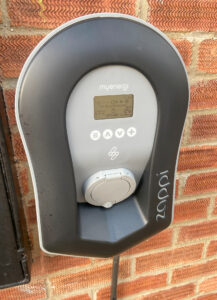
Our ‘Zappi’ charger
Water
When we built our house, we were lucky enough to have a well in the garden. We piped rainwater from the gutters into the well and used a pump to irrigate the garden. Treating the water to drinking standards would have been too costly, so we kept a mains connection for household use.
Our original plan was to use well water for toilet flushing (and we plumbed the house accordingly), but in reality, the water was cloudy and tended to stain (even after filtration) so we stuck to using it for the garden. Still, it saved a significant amount of drinking-quality water.
Reducing water consumption is vital, but it’s not as easy as it sounds. At our bungalow, we rely on water butts to collect as much rainwater as possible for the garden.
More sophisticated systems are available, for instance, underground rainwater tanks. These aren’t a new idea; friends living in a Victorian rectory still use a huge tank built at the same time as the house. Some systems work brilliantly, others suffer from clogging due to debris, so maintenance is key.
Water-saving should be considered just as important as energy-saving. Modern toilets often have dual flush options that use less water, though not all are as efficient as they claim. Greywater systems where bath, shower, and washing machine water is reused for flushing toilets are another option, particularly in new builds, where plumbing can be designed with these systems in mind.
Plants
Planting trees around your home offers huge benefits. Deciduous trees planted on the south side of your property can provide shade in summer while allowing the lower winter sun to warm your home naturally.
Trees and hedges also help reduce noise and air pollution, create cool shady areas outdoors, and even offer fruit and food if you choose productive varieties.
Don’t overlook the space around you. Even a balcony garden or a few indoor plants can make a difference. Plants not only improve air quality but also have proven benefits for mental wellbeing.
Final thoughts
Small thoughtful changes, whether it’s how we travel, use water, generate energy, or manage our gardens, all add up to a more sustainable way of living. While no solution is perfect, making conscious choices and adapting where we can will not only reduce our environmental impact but also create healthier, more resilient homes and communities for the future.
Continue the story – quick links
Part 1: Getting started: First steps to a sustainable home
Part 2: Insulation and ventilation: Creating an efficient, comfortable home
Part 3: Eco-friendly heating and energy solutions
Part 5: The case for retrofitting and higher building standards