

 Contact us
 Visit CPRE.org
 Donate
The Devil’s Stone of Lyng: a Norfolk legend for Halloween

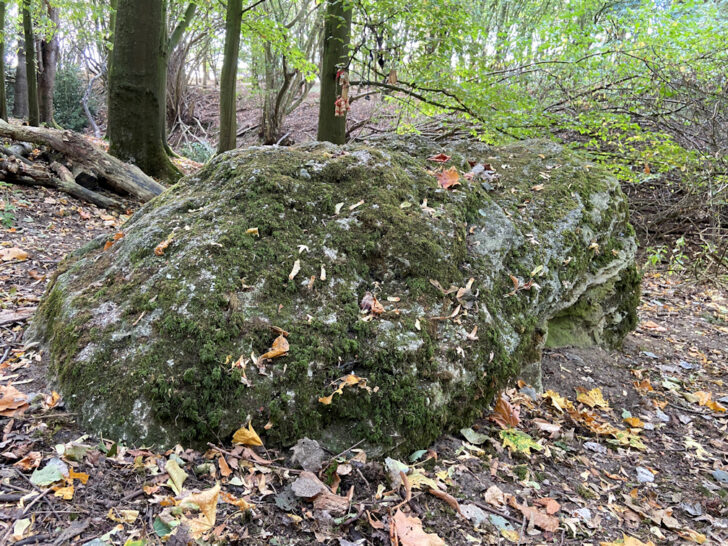
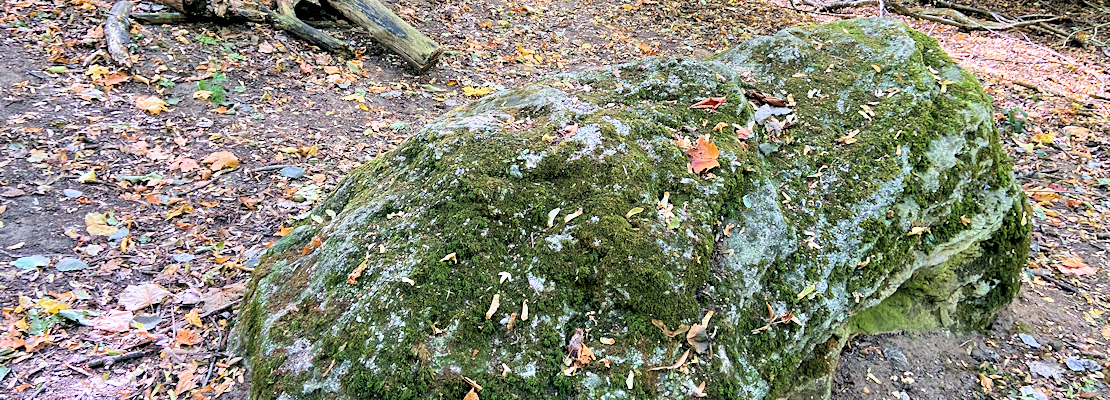
Hidden among the trees of a quiet Norfolk woodland lies a mysterious boulder with a rather sinister reputation.
Known as the Great Stone of Lyng, the Devil’s Stone, the King’s Stone and St Edmund’s Stone, it has inspired stories of bloody battles, restless ghosts and supernatural powers for centuries. And, as Halloween approaches, it offers a fascinating glimpse into the folklore, history and geology that make Norfolk’s countryside so special.
Legends of the stone
According to local legend, the stone will bleed if pricked with a pin. Some say this is the blood of victims sacrificed upon it by ancient Druids; others believe it comes from soldiers killed during a battle between King Edmund and the Vikings.
There are also tales of buried treasure beneath the boulder and claims that birds fall silent in its presence.
The woodland where it stands is known as the King’s Grove, and tradition places a battle here between Edmund, the ninth-century King of East Anglia, and the Danes. Edmund was killed by Viking forces in 869 or 870 and later became venerated as a saint, but there is no firm evidence that he fought at Lyng itself. Over time, however, the story has become part of the character of this quiet corner of Norfolk.
The ghosts said to haunt the Grove are just as unsettling.
Stories tell of phantom soldiers and horsemen wandering between the trees, while the spirits of nuns are said to cross the road from the ruined remains of a chapel.
According to another tale, the nuns’ chapel bells were thrown into the River Wensum when the community departed, but their ringing can still sometimes be heard beneath the water.
Perhaps the most memorable part of the legend is that these fears once shaped everyday life.
A newspaper account from 1939 recalled how the Reverend E. C. Weddall, Rector of Lyng, described local schoolchildren being allowed to leave school around 20 minutes early. They needed to get past the mysterious woodland before darkness fell.
The Great Stone has even resisted attempts to move it. Local tradition tells of a landowner who tried to shift it using a dozen horses, supposedly in the hope of finding treasure beneath. The stone remained where it was.
With its ancient track, shadowy trees and strange boulder, the place had a reputation that lingered long after the stories were first told.
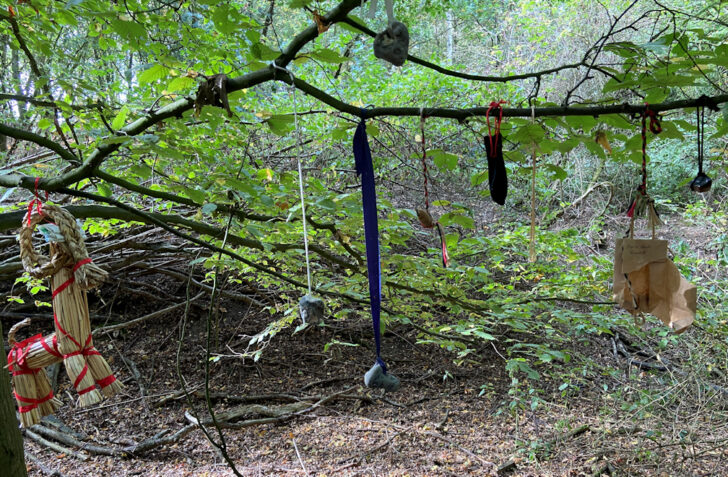
Today, visitors still come to see it, and small offerings are sometimes left beside it – a reminder that the urge to mark mysterious places has not disappeared.
Truth is just as strange as fiction…
Yet the stone’s real origins are every bit as extraordinary as the folklore.
The stone is a glacial erratic, a large boulder transported by ice during the Ice Age and deposited far from where its rock originally formed. Made of conglomerate, it stands out against the surrounding landscape, where chalk and glacial deposits are much more typical. Long before King Edmund, the Vikings or the first storytellers, moving ice helped shape this part of Norfolk and left the stone behind.
The surrounding landscape tells its own story. The nearby River Wensum, gently rolling fields, wooded slopes and old tracks reflect the combined influence of geology, water and generations of human activity. The stone is thought to lie beside an old route through the Grove, linking it to the paths people have travelled for centuries.
Norfolk’s countryside may seem peaceful and familiar, but look a little closer and it reveals layer upon layer of natural and human history.
Folklore has its roots in nature
The Devil’s Stone of Lyng is a wonderful example of how folklore grows from the places around us. We name unusual landmarks, connect them to events and people, and pass their stories down through generations. Whether you believe in ghostly horsemen or prefer the explanation of glacial geology, the stone offers a tangible connection to Norfolk’s past.
This Halloween, why not explore somewhere closer to home? Norfolk is full of ancient lanes, forgotten ruins, unusual landmarks and local legends waiting to be discovered. From the Broads to the Brecks, from river valleys to the coast, our countryside is more than a beautiful view: it is a living record of the forces and people that shaped it.
Get involved
Do you know a mysterious place or local legend in your part of Norfolk? We’d love to hear about it. Share your favourite countryside discoveries and help others explore the stories hidden on their doorstep.
At CPRE Norfolk, we believe these landscapes are worth protecting for their wildlife, heritage, beauty and the sense of place they give us.
If you value Norfolk’s countryside and want to help safeguard it for future generations, consider joining us by becoming a member. Together, we can help keep the places that make Norfolk special alive for people and nature.
And if you visit the Great Stone of Lyng, take a moment to listen among the trees. You may hear nothing more supernatural than the wind and birdsong, but you’ll be standing beside a stone that has travelled through an Ice Age and gathered centuries of stories along the way.