

 Contact us
 Visit CPRE.org
 Donate
The hum of the countryside

Have you noticed hummingbird hawk-moths hovering around your garden for the first time this year? Or more tiny ivy bees buzzing around the ivy in your hedgerows than usual?
If so, you’re not imagining it.
2026 has been a particularly noticeable year for some warmth-loving visitors to our gardens and countryside. Hummingbird hawk-moths have been reported in unusually high numbers across the UK, while ivy bees, one of Britain’s later-flying solitary bees, continue to expand their range.
These two very different insects have something in common: they are showing us how closely wildlife is connected to weather, climate and the availability of suitable habitat.
And Norfolk, with its relatively warm climate, extensive countryside and important coastal and agricultural landscapes, is a fascinating place to watch those changes unfold.
A moth that thinks it’s a hummingbird
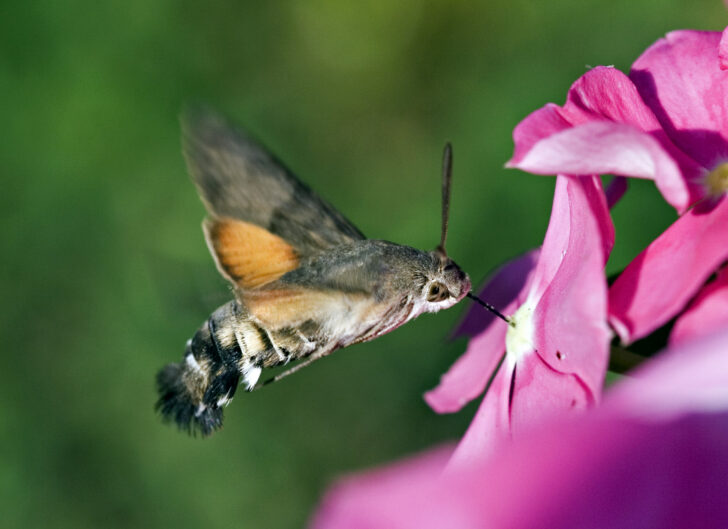
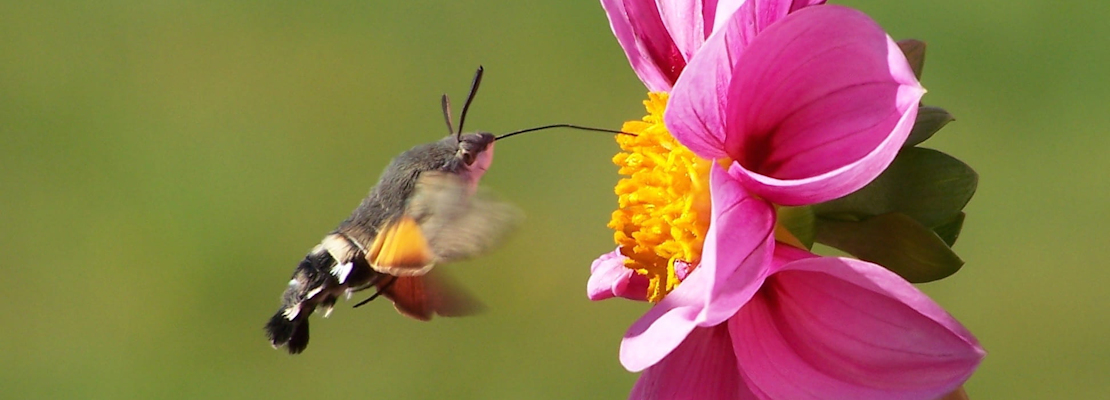
Despite its name, the hummingbird hawk-moth (Macroglossum stellatarum) is very definitely a moth.
But watch one feeding and it’s easy to see where the name comes from.
It hovers almost motionless in front of a flower, rapidly beating its wings while it uses a long proboscis to reach nectar. Its orange hindwings flash as it darts from flower to flower, behaviour that can make it look remarkably like a tiny hummingbird.
The species is a migrant, arriving in Britain from southern Europe and North Africa. It can appear almost anywhere in the UK between spring and late autumn, although numbers generally peak during the summer.
Butterfly Conservation notes that some hummingbird hawk-moths are now breeding here, and a small number may be surviving British winters as they become milder.
And 2026 has been a particularly good year for sightings.
Reports this summer have suggested a bumper influx, with hot weather and strong winds helping bring moths northwards from continental Europe and North Africa. There is also a possibility that dry conditions in their Mediterranean breeding areas have encouraged some to travel further in search of food.
So when you see one hovering over your lavender, buddleia, honeysuckle, or other nectar-rich flowers, you’re witnessing a remarkable little traveller.
Meet the ivy bee

This star of the late-summer hedgerow is much smaller and much easier to overlook.
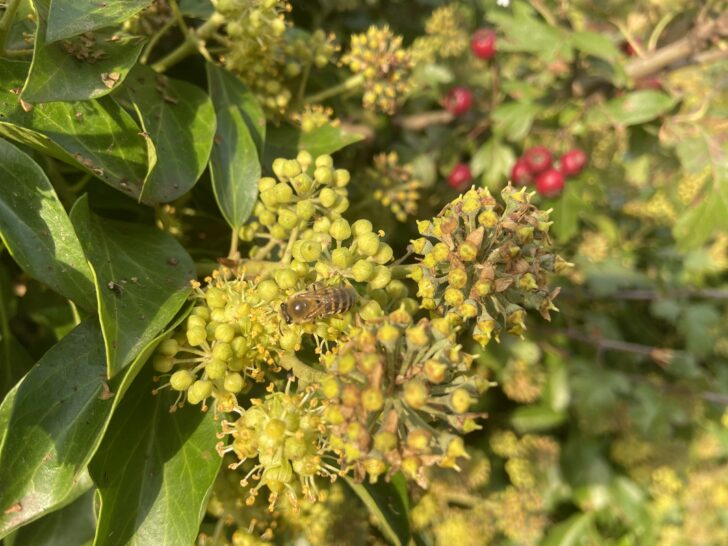
The ivy bee (Colletes hederae) is a solitary mining bee which spends much of its short adult life foraging on ivy and other late-flowering plants.
Unlike honeybees, ivy bees don’t live in colonies. Instead, females excavate their own nests in light, often sandy soil. However, they can nest in large aggregations, meaning that a seemingly unremarkable patch of bare ground can suddenly become a buzzing bee metropolis.
Ivy bees are particularly interesting because they’re relatively new arrivals to Britain. The first mainland UK record was made in Dorset in 2001. Since then, they have spread rapidly across southern England and Wales, with increasing records further north. They typically emerge from late August and can be seen until November.
Their timing is important.
As summer flowers begin to fade, ivy comes into its own.
Those tiny greenish flowers provide an important late-season source of nectar and pollen when many other plants have finished flowering. Ivy bees have effectively found a niche at a time of year when food can otherwise become harder to find.
So that seemingly ordinary tangle of ivy in a Norfolk hedgerow could be providing an autumn feast for hundreds of insects.
Is climate change helping them?
Partly – but the story is complicated.
Warmer temperatures can allow some insects to survive further north, remain active for longer and reproduce more successfully.
But it would be wrong to look at more hummingbird hawk-moths or ivy bees and conclude that climate change is good for wildlife.
There are winners and losers.
A warmer climate may suit some species while creating increasingly difficult conditions for others. Extreme heat, drought, flooding and changes to the timing of food availability can disrupt the intricate relationships between plants, insects and other wildlife. And climate change is only one pressure.
Habitat loss, fragmentation, intensive land management, pesticide use and the disappearance of flower-rich grassland all make life harder for many pollinators.
That is why the wider landscape matters so much.
The importance of the humble hedgerow
This is where Norfolk’s hedgerows come in.
A hedgerow is not simply a line of bushes separating one field from another. It is a living corridor through the countryside.
Hedgerows provide food, shelter and nesting opportunities for wildlife, while connecting otherwise isolated habitats. They can support pollinators, birds, mammals and countless other creatures, as well as capturing carbon and helping to define the character of our rural landscapes.
In a changing climate, those connections become even more important.
Imagine the countryside as a vast patchwork. If wildlife habitat exists only as isolated islands, some species may struggle to move as conditions change. Connected hedgerows, grasslands, woodland and other habitats give wildlife routes through the landscape.
The East of England is particularly important for pollinators, but many remaining flower-rich habitats are small and increasingly isolated. Connecting them can help insects move between feeding and nesting sites and make the wider landscape more resilient.
Become a Hedgerow Hero
At CPRE Norfolk, we believe our hedgerows deserve much more recognition and protection.
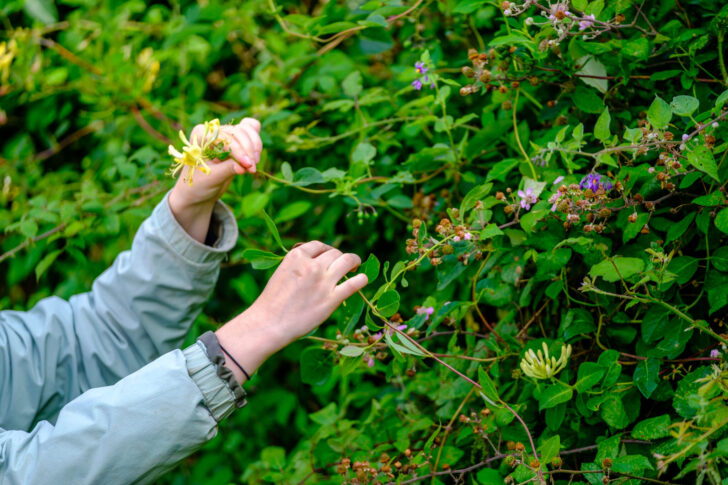
Our Hedgerow Hero campaign is calling for more hedgerows to be planted, restored and properly cared for across Norfolk and beyond.
CPRE is supporting the call for a 40% increase in the UK’s hedgerow network by 2050, a target recommended by the Climate Change Committee. That means creating and restoring thousands of miles of hedgerow – reconnecting the countryside and giving nature more room to move.
It is an ambitious target, but the principle is simple.
More hedgerows mean more habitat.
More connections mean more opportunities for wildlife.
And a healthier, better-connected countryside is better equipped to cope with a changing climate.
You can help too.
- Leave some areas of your garden a little wilder.
- Plant nectar-rich flowers that bridge the gaps between seasons.
- Avoid pesticides where possible.
- Let ivy flower rather than cutting it back just as it comes into bloom.
- And when you’re out walking, take a closer look at the hedgerows around you.
The arrival of new species and changing wildlife patterns are fascinating. They are also a reminder that Norfolk’s countryside is not static.
The next time you spot an unusual moth in your garden or a cloud of tiny bees around flowering ivy, stop and take a closer look.
They may be small.
But they are telling us something rather big about the world around us.