

 Contact us
 Visit CPRE.org
 Donate
Creating an eco-friendly home Part 2 – Insulation and ventilation

CPRE Norfolk trustee Chris Dady, continues to chart his journey through building and retrofitting two properties, sharing what he learned on his journey.
Quick links to other sections of this story can be found at the bottom of the page.
Insulation and ventilation: Creating an efficient, comfortable home
Insulating your home remains one of the most effective ways to save energy and enhance comfort. Here’s a practical guide to help you maximise insulation, improve ventilation, and make informed choices for retrofitting.
Insulate Insulate Insulate
That mantra has been with us for many years, and remains the priority. It makes no sense to spend money on heating your house, and then losing this heat to the surrounding area.
A well-insulated house will also keep heat out in summer. With the changing climate this is a very important benefit.
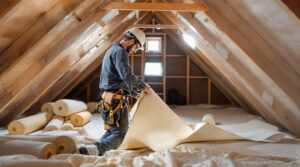
Loft insulation
Effective insulation starts at the top with loft insulation. Savings in energy expenditure can quickly recoup the costs of the cost of installing the insulation and certain lower income groups may qualify for financial assistance.
The recommendation is about 300mm (or a foot) depth but more is better than less to retain as much heat as possible.
In our self-build, we used non-itch recycled glass bottle insulation and some sheep’s wool. We also used non-itch to top up the exiting mineral insulation in the bungalow and help cover any gaps.
Compared to mineral wool, the non-itch looks great and is both easy to install and pleasant to work with – no gloves or masks required!
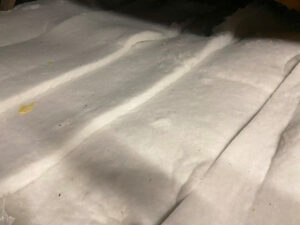
A nice clean loft with a top up layer of recycled plastic bottle insulation
While non-itch insulation is more expensive (roughly £20 per square meter vs. £10 for mineral wool), we decided it was worth the extra cost for the comfort and ease of installation. However, mineral wool will perform just as well so remains a money saving option.
In both our properties we added a decent size loft hatch with ladder and added some flooring sheets which makes working in the loft in the future so much easier. These are not necessary for a ‘green’ project.
Some dwellings may have a ‘room in the roof’ in which case a different and more extensive solution will be needed to add the insulation, but it could be done in the same way as internal wall insulation.
Wall Insulation
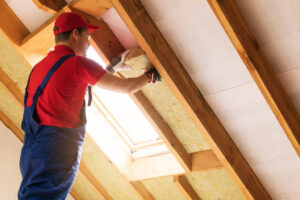
In our self-build, we used super insulation panels for the walls, however with a retrofit you will have to work with what you have.
Luckily, the bungalow has cavity walls, so filling them was a straightforward way to add insulation. We managed to obtain a small grant to help cover cavity wall insulation costs, so it’s worth looking into financial assistance options.
Always obtain quotes from several firms and check reviews and recommendations before making your decision. Ask for additional advice if your house is in a wet, exposed position as cavity wall insulation is not always the most appropriate solution.
For homes with solid walls, you’ll need to choose between internal and external wall insulation, each with its own benefits:
External Wall Insulation
- Major project but does not impact on the living arrangements or room size.
- Changes the building’s exterior so may need to discuss with the local planning officer / conservation officer, especially if the building is listed.
- Costs around £13,000 for an average home.
Internal Wall Insulation
- More disruptive but can be done room by room over time.
- Decreases room size and requires redecoration afterwards.
- Costs around £8,000 for an average property.
Wall cladding is a major undertaking and can lead to new issues if not done properly. Ensure you have no wall related issues before you start and select a contractor carefully.
Floor Insulation
Up to 20% of heat can escape through floors, especially in older homes like our bungalow with suspended wooden floors. Retro-fitting underfloor heating in the bungalow was deemed to be impractical so we considered lifting floorboards and adding inter-joist insulation. However, as the floors were draught free with thick floor boards we decided this was unnecessary.
If your floors are draughty (suspended floors need a flow of air to avoid damp and rot) you can fill the gaps between the boards which is a relatively cheap option.
Solid floors are more difficult. You can rip them up and start again (building regulations will apply) or you can lay rigid foam and chipboard over the floor, potentially including electric mat underfloor heating. This will raise the floor level so other modifications will be needed.
As a rough guide, budgeting around £100 per square meter will help you plan for this upgrade.
Flooring in the self-build was much more straightforward. We laid solid floors with high levels of insulation with pipes embedded for underfloor heating.
A warm floor is a treat, but not one that comes cheaply (other than in new build). Compared with loft and wall insulation, it does not nett that much in the way of savings.
Doors & Windows
Poorly insulated or badly fitting doors and windows can let valuable heat escape, cancelling all other efforts to insulate the property.
Double glazing is often an excellent investment if you currently have single glazing, particularly in large windows. Replacing doors with well-insulated models is also a worthwhile upgrade.
Costs will vary considerably, especially if not using plastic. A small property could cost £7500 to have a complete set of double-glazed windows and insulated doors but this could be done piecemeal over time as the budget permits. Funding may be available in some areas.
We already had double glazing fitted in the bungalow, so decided the expense of replacements was not worthwhile. However, we did seal some gaps around the window frames and change the thin plastic front door with an insulated one.

Conservatories
Conservatories can become superheated in the summer and do not retain heat during colder weather. Both effects can severely impact temperatures elsewhere in the house.
Lightweight ceiling insulation or internal coverings can help manage temperature extremes but may require planning approval and be subject to building control.
Ventilation and Draughts
While insulation is crucial, good ventilation is equally important to prevent condensation, mould, and improve indoor air quality.
Draughts are uncontrolled ventilation, which are undesirable as they lead to heat loss.
Older properties, especially those with solid walls, often depend on natural airflow for ventilation. I know of a house where cement render was applied to soft brick walls and non-ventilated double glazing was installed. The result? Condensation running down the interior walls, definitely not the improvement the owners were aiming for!
In our bungalow, we initially had a couple of open vents. However, we blocked these off because we introduced other, more controlled methods of ventilation. It is important to note: if you have gas appliances or any form of fossil-fuel heating, including wood-burning stoves, you must maintain an open vent for safety.
Modern windows usually come with built-in trickle vents. In our case, due to planning conditions, our new windows didn’t have them, so we installed acoustic wall vents instead.
We also fitted a Passivent system in moisture-generating rooms; the kitchen, bathrooms, and utility room. This involved placing ceiling vents connected to a roof outlet. The clever part was that each vent used a simple mechanical system that opened or closed depending on moisture levels. A small sponge would absorb moisture, become heavier, and open the vent!
This type of system is especially helpful if you live near a busy road, as it reduces both noise and airborne pollutants entering the home (acoustic vents help with this too).
A Passivhaus approach, by contrast, aims for an almost completely airtight building (apart from when windows or doors are opened). Ventilation is managed by a mechanical heat recovery system, which extracts stale air, transfers its heat to incoming fresh air through a heat exchanger, and circulates that warmed fresh air back into the house.
While achieving Passivhaus-level airtightness in a retrofit is rare, installing a mechanical heat recovery ventilation system is still possible and often beneficial.
In our bungalow, we now rely mainly on trickle vents and a bathroom extractor fan. While this provides ventilation, it’s not as effective as the systems we’ve used before. Studies show that relying solely on trickle vents can lead to poor indoor air quality, depending on a property’s location. For homes near busy roads or other sources of pollution, a mechanical ventilation system (costing around £6,500 on average) may not just be beneficial, it could be essential.
Final thoughts: Insulation’s summer benefits
Well-insulated homes are not only warmer in winter but also help to keep heat out during summer, creating a more comfortable indoor environment year-round.
Whether you’re retrofitting an older home or considering new builds, prioritising insulation and ventilation will create a more energy-efficient, climate-resilient living space.
Continue the story – quick links
Part 1: Getting started: First steps to a sustainable home
Part 3: Eco-friendly heating and energy solutions
Part 4: Greener solutions for car and travel, water conservation & gardens
Part 5: The case for retrofitting and higher building standards